
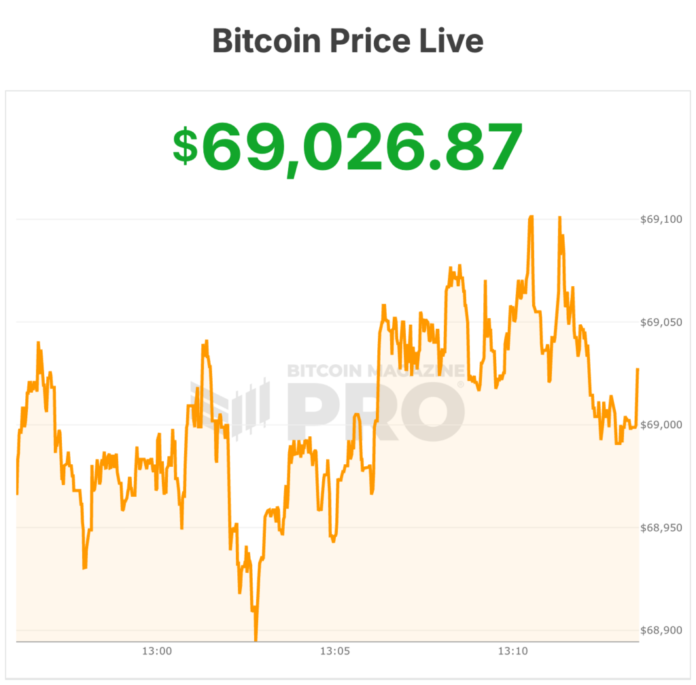
Bitcoin price traded near $69,000 on Monday, stabilizing after last week’s brief rally and then sell-off into the weekend. The cryptocurrency has remained resilient even as traditional equities and oil markets experience sharp swings.
Bitcoin price remains confined to the $62,500–$72,000 range following February’s sharp decline, with repeated attempts to break above $72,000 failing, according to Bitfinex analysts.
A high of $74,047 on March 4 marked a brief breakout for the bitcoin price, but momentum could not be sustained, and the move was quickly reversed. The March 6 spike in negative realized profits of around $900 million shows that many investors exited positions at a loss during the failed rally.
Passive sell orders and late-entry leveraged longs absorbed buying pressure, keeping the price trapped within its established range.
Since the February low, dip buyers have supported a 20.5% recovery, helping stabilize the market.
Realized losses have now sharply compressed, suggesting that forced selling has largely subsided, but upside remains capped until $72,000 is decisively cleared, according to Bitfinex.
Bitcoin price weathers macro turbulence
The surge in volatility comes alongside dramatic movements in energy markets, where West Texas Intermediate crude briefly rose above $110 per barrel before easing back.
Supply concerns driven by geopolitical tensions in the Middle East have weighed on global equities and safe-haven assets such as gold, while pushing demand toward the U.S. dollar.
Bitcoin’s own volatility measures suggest the crypto market may have already experienced its most stressful phase. The Bitcoin Volmex Implied Volatility Index (BVIV) spiked earlier this year when bitcoin price briefly fell to $60,000, indicating heightened market stress.
Since then, volatility has eased, suggesting that crypto markets front-ran some of the turbulence now affecting traditional assets.
Despite macro uncertainty, bitcoin’s price has held above $66,000, recovering from minor pullbacks that followed attempts to break through resistance near $74,000. The market has seen a consolidation phase, with buyers defending levels around $66,000 to $69,000, according to Bitcoin Magazine Pro data.
The ongoing conflict in the Middle East and disruptions to shipping routes have contributed to sharp spikes in oil prices. The Strait of Hormuz closure and recent strikes on regional depots tightened supply, adding upward pressure on crude and fueling concerns about global inflation. Rising energy costs ripple through industries worldwide, potentially increasing borrowing costs and putting pressure on risk-sensitive assets, including bitcoin.
On top of this, underlying financial pressures that could influence Bitcoin’s appeal.
“While chaotic global events are getting most of the attention and are often credited for bitcoin’s price moves, there may be deeper stresses forming beneath the surface,” Timot Lamarre, director of market research at Unchained Pressure, wrote to Bitcoin Magazine. “In the private credit market, including unusually high withdrawal requests from large funds, suggests liquidity in parts of the financial system may be tightening. Markets tend to anticipate the policy response to financial stress before it happens, and if investors begin expecting another round of monetary expansion, the incentive to hold bitcoin only grows stronger.”
Global equities have reflected these pressures. Japan’s Nikkei and South Korea’s KOSPI both dropped more than 7% after market openings, while China and Hong Kong’s indices recorded smaller declines.
The strength of the U.S. dollar, coupled with elevated yields, has reinforced its role as a primary defensive asset in the current environment, leaving bitcoin price and other risk assets to navigate a more complex landscape.
Within this context, bitcoin price has maintained relative stability. Its market capitalization has remained above $1.3 trillion, and trading activity shows continued interest across spot and derivatives markets.
Bitcoin’s mined supply also surpassed 20 million BTC today — over 95 % of the 21 million cap — leaving just about 1 million coins left to be mined over the next century.